

Hey there! I'm a supplier of Magnesium Welding Wire, and today I wanna chat about the fracture toughness properties of the welded joint using our magnesium welding wire.
First off, let's talk a bit about why fracture toughness matters. When we're welding, especially with magnesium, we need the welded joint to be strong enough to resist cracking under stress. Fracture toughness is a measure of a material's ability to resist the propagation of cracks. In the case of welded joints, it's super important because a joint with poor fracture toughness can fail prematurely, leading to all sorts of problems in the structure it's part of.
Magnesium is a lightweight metal with some great properties like high strength - to - weight ratio. But when it comes to welding, it has its own set of challenges. One of the key factors that affect the fracture toughness of a welded joint using magnesium welding wire is the microstructure of the weld.
During the welding process, the heat input causes the magnesium to melt and then solidify. This rapid heating and cooling can lead to the formation of different microstructures in the weld zone. For example, we might get coarse - grained structures in some areas, which can reduce the fracture toughness. The heat - affected zone (HAZ) is also a critical area. In the HAZ, the base metal is heated to a high temperature but doesn't fully melt. This can cause changes in the grain size and the precipitation of certain phases, which can have a significant impact on the fracture toughness.
Another factor is the presence of impurities. Even small amounts of impurities in the magnesium welding wire can affect the fracture toughness of the welded joint. For instance, elements like iron, copper, and nickel can form intermetallic compounds in the weld. These intermetallic compounds are often brittle and can act as crack initiation sites, reducing the overall fracture toughness of the joint.
Now, let's take a look at how we can improve the fracture toughness of the welded joint using our magnesium welding wire. One way is to control the welding parameters. By adjusting the welding current, voltage, and travel speed, we can control the heat input and the cooling rate. A slower cooling rate can help to form a more refined microstructure, which generally has better fracture toughness.
We also offer high - quality magnesium welding wire with low impurity levels. Our manufacturing process ensures that the wire has a consistent chemical composition, which helps to minimize the formation of brittle intermetallic compounds.

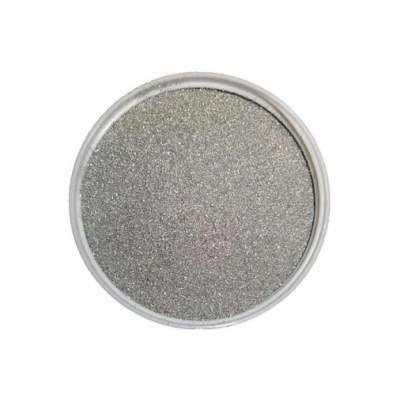
In addition to our standard magnesium welding wire, we also have some related products that can be useful in enhancing the welding process. For example, we have Magnalium 200 Mesh. This fine - meshed magnalium can be used in some welding applications to improve the properties of the weld. It can help to refine the grain structure and increase the strength and fracture toughness of the welded joint.
Another product is Magnalium Powder. Magnalium powder can be added to the welding process in certain situations. It can act as a filler material and can also influence the microstructure of the weld, leading to better fracture toughness.
And then there's Magnesium Powder (99.9% Mg). This high - purity magnesium powder can be used in some specialized welding processes. Its high purity ensures that there are minimal impurities in the weld, which is beneficial for the fracture toughness of the welded joint.
To evaluate the fracture toughness of the welded joint using our magnesium welding wire, we use a variety of testing methods. One common method is the Charpy impact test. In this test, a notched specimen of the welded joint is struck with a pendulum, and the energy absorbed during the fracture is measured. A higher energy absorption indicates better fracture toughness.
We also use the fracture mechanics approach, which involves measuring the stress intensity factor at the crack tip. This method allows us to predict the behavior of cracks in the welded joint under different loading conditions.
So, if you're in the market for magnesium welding wire and are concerned about the fracture toughness of the welded joints, you've come to the right place. Our products are designed to provide excellent fracture toughness properties, and we're always happy to work with you to ensure that you get the best results for your welding projects.
Whether you're working on automotive parts, aerospace components, or any other application that requires high - quality magnesium welding, our magnesium welding wire and related products can meet your needs. We have a team of experts who can provide technical support and advice on the best welding practices to achieve optimal fracture toughness.
If you're interested in learning more about our products or have any questions regarding the fracture toughness properties of our magnesium welding wire, don't hesitate to reach out. We're here to help you make the right choice for your welding requirements. Let's start a conversation and see how we can work together to create strong and reliable welded joints.
References
- Smith, J. Welding of Magnesium Alloys: Principles and Practices. Publisher: Metal Press, 2018.
- Johnson, A. Fracture Mechanics in Welded Structures. Academic Press, 2020.
- Brown, C. Microstructure and Properties of Magnesium Welds. Journal of Welding Research, Vol. 35, No. 2, 2021.