


- The Grignard reaction is a simple acyl addition reaction between a nucleophilic organomagnesium reagent (a Grignard reagent) and an electrophilic carbonyl. It is synthetically a very useful reaction, as it is one of few that form a carbon-carbon bond. Grignard reagents are prepared by reacting alkyl halides with magnesium metal. Like many organometallic compounds, Grignard reagents are very water sensitive, and special precautions must be taken to minimize the amount of moisture they are exposed to. The humidity of the air can be sufficient to ruin a Grignard reagent fairly quickly. Typically, carefully dried reagents and solvents are used in preparing and using Grignard reagents, and the glassware used is flame or oven dried. In this experiment, you will be preparing phenylmagnesium bromide from bromobenzene, and reacting this Grignard reagent with benzophenone to synthesize triphenylmethanol.
-
Flame dry all glassware before proceeding. Obtain 20 mL of diethyl ether in a 50 mL Erlenmeyer flask to use for the experiment. Assemble a Claisen tube, rubber septum, drying tube (containing anhydrous CaCl2), 25 mL round bottom flask and spin vane as shown below. Place 150 mg of magnesium turnings and a spin vane into the round bottom flask. Add a small crystal of iodine and attach reattach the flask to the assembly. In a clean, DRY 5 mL conical vial, dissolve 1.04 g of bromobenzene in 4 mL of diethyl ether. Add 1 mL of this solution to the flask of magnesium using a syringe and warm the flask over a hotplate while stirring. Once the reaction begins to boil, add the remaining bromobenzene solution drop-wise over the span of 10 minutes. Continue to gently reflux the reaction for an additional 10 minutes after all of the bromobenzene has been added, then cool to room temperature.
-
In a 5 mL reaction vial, dissolve 1.09 g of benzophenone in 2 mL of diethyl ether. Using a syringe, add this benzophenone solution dropwise to the stirred Grignard reagent prepared in Part A. Stir the reaction for an additional 10 minutes after all of the benzophenone has been added. If the reaction stops stirring, break up the solids with a spatula. Quench the reaction by adding 6 mL of 6M HCl, dropwise at first. (CAUTION! 6M HCl is a strong acid and can cause serious burns. Handle with gloves!)
-
Pour the contents of the reaction flask into a separatory funnel, rinsing the reaction flask out with another 2 mL of diethyl ether. Drain off the lower aqueous layer and then wash the remaining organic layer with 20 mL of saturated NaHCO3. Drain the lower aqueous layer and pour the organic layer into a 25 mL Erlenmeyer flask. Dry the solution over anhydrous Na2SO4. Decant the dried solution into a small beaker and evaporate the diethyl ether by warming gently on a hotplate under a hood.
-
Organic Chemistry Lab CHEM 304 Add 3 mL of petroleum ether to the solid, and warm the mixture gently to dissolve any biphenyl byproduct (do not boil away all of the petroleum ether!). Stir the mixture well with a stir rod or spatula during the heating period. Allow the mixture to cool and collect the solid via vacuum filtration. Determine the weight of your product, and obtain a melting point and IR spectrum.


Use bags, metal pail, or paper pail to pack, the underlayer are plastic bag.

Transport Tool: Trucks or containers.

Storage Methods: The storehouse should be ventilated, dry, fire preventing, wet preventing, static preventing and the hermetic goods.

Factory direct supply

Particle size and Package Can customized

Strickly quality control system and advanced testing equipments

Good aftersale service.

As a technical-commercial oriented company, NY2 has grown to have now five offices located in China Mainland, lndia, Turkey, Hong Kong, German with either sales or warehouse function.
Hot Tags: magnesium turnings grignard reaction, China magnesium turnings grignard reaction suppliers, factory, chemical reaction merchandise sourcing, Magnesium chip machine chips, bulk reaction chemicals sourcing, chemical reaction goods sourcing, chemical reaction elements purchase, chemical reaction elements sourcing
| Product | Grade | Shape | Composition(%) | AD(g/cm3) | Particle Size |
| Magnesium Powder |
SMP358 | Nearly Spherical | >Mg 99% | 0.86-0.92 | 35-80 mesh |
| SMP451 | Nearly Spherical | >Mg 99% | 0.86-0.92 | 45-100 mesh | |
| MP30 | lrregular | >Mg 99% | 0.64-0.73 | 30-80 mesh | |
| MP60 | lrregular | >Mg 99% | 0.64-0.73 | 60-200 mesh | |
| MP150 | lrregular | >Mg 99% | 0.76-0.85 | -150 mesh | |
| Can be produced according to customer specifications | |||||
| Product | Grade | Shape | Composition(%) | AD(g/cm3) | Particle Size |
| Magnesium Granules |
MG12 | Particles or spheres | ≥99.5% | - | 12-35 mesh |
| MG20 | Particles or spheres | ≥99.5% | - | 20-80 mesh | |
| MG100 | Particles or spheres | ≥99.5% | - | 100mesh all pass | |
| Can be produced according to customer specifications | |||||
| Product | Grade | Shape | Composition(%) | AD(g/cm3) | Particle Size |
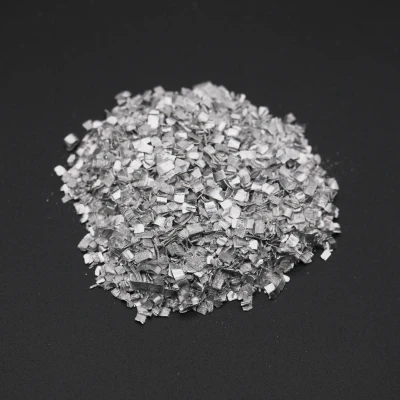
| Magnesium Turning Chips |
MS6 | Chips | ≥99.7% | - | 6mesh All pass |
| MS840 | Chips | ≥99.7% | - | 8-40mesh | |
| MS2080 | Chips | ≥99.7% | - | 20-80 mesh | |
| Can be produced according to customer specifications | |||||
| Product | Grade | Shape | Composition(%) | AD(g/cm3) | Particle Size |
| Magnesium Alloy Chips |
AZ91D | lrregular | Mg90.43; AI8.9; Zn0.43 | - | 30-80 mesh |
| ZK61 | lrregular | Mg94.46; AI0.0006 Zn5.19 |
- | 30-80 mesh | |
| Can be produced according to customer specifications | |||||
| Product | Grade | Shape | Composition(%) | AD(g/cm3) | Particle Size |
| Magnalium Powder |
AMAP50 | lrregular | AI:50±2%; Mg:50±2% | 0.76-0.85 | 60-200 mesh |
| Can be produced according to customer specifications | |||||
| Product | Grade | Shape | Composition(%) | AD(g/cm3) | Particle Size |
| Magnesiun Desulphurization Reagent | PSMp1080 | lrregular | ≥Mg 92% | 0.75-0.95 | 2-0.18mm (10mesh~80mesh) |
| Can be produced according to customer specifications | |||||


