

Can desulfurized magnesium powder be used in desulfurization of gas from anaerobic digestion?
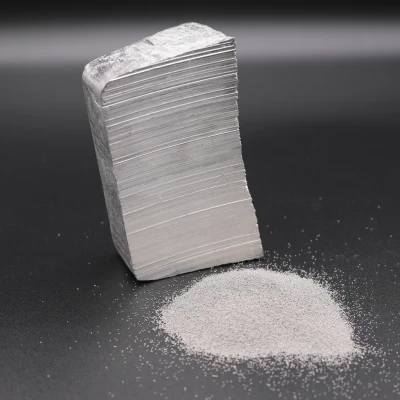
As a supplier of Desulfurized Magnesium Powder, I've been constantly exploring new applications for this versatile product. One question that often comes up in industry discussions is whether desulfurized magnesium powder can be effectively used in the desulfurization of gas from anaerobic digestion. In this blog post, I'll delve into this topic, analyzing the potential, challenges, and practical considerations of using our desulfurized magnesium powder in this context.
The Need for Desulfurization in Anaerobic Digestion Gas
Anaerobic digestion is a well - established process for treating organic waste and producing biogas, which mainly consists of methane (CH₄) and carbon dioxide (CO₂). However, the biogas also contains various impurities, including hydrogen sulfide (H₂S). Hydrogen sulfide is a highly corrosive and toxic gas. When used in engines, boilers, or fuel cells, H₂S can cause severe damage to equipment, reducing its lifespan and efficiency. Moreover, the combustion of H₂S - containing biogas releases sulfur dioxide (SO₂), a major air pollutant that contributes to acid rain and respiratory problems. Therefore, desulfurization of biogas is an essential step to ensure its safe and efficient utilization.
Properties of Desulfurized Magnesium Powder
Desulfurized magnesium powder has several properties that make it a potential candidate for biogas desulfurization. First, magnesium has a high affinity for sulfur. When desulfurized magnesium powder reacts with hydrogen sulfide, it forms magnesium sulfide (MgS), which is a stable compound. The reaction can be represented by the following chemical equation:
Mg + H₂S → MgS+ H₂
This reaction is thermodynamically favorable, and the formation of MgS effectively removes H₂S from the gas stream.
Second, desulfurized magnesium powder is relatively easy to handle and store compared to some other desulfurization agents. It is a solid powder that can be easily metered and injected into the gas - treatment system.

Third, desulfurized magnesium powder has a relatively high surface area, which provides more reaction sites for the desulfurization reaction. This can enhance the reaction rate and efficiency of H₂S removal.
Advantages of Using Desulfurized Magnesium Powder in Biogas Desulfurization
High Desulfurization Efficiency
As mentioned above, the chemical reaction between magnesium and hydrogen sulfide is highly efficient. Under proper conditions, desulfurized magnesium powder can achieve a high removal rate of H₂S from biogas. This can significantly reduce the H₂S content in the biogas to meet the requirements for various applications.
Environmental Friendliness
Compared to some traditional desulfurization methods that may produce secondary pollutants, the use of desulfurized magnesium powder is more environmentally friendly. The reaction product, magnesium sulfide, can be further processed or recycled. For example, it can be used in the production of other magnesium - based products or as a raw material in the metallurgical industry. Additionally, magnesium is an essential element for plant growth. You can learn more about the use of desulfurized magnesium powder as fertilizer at Desulfurized Magnesium Powder As Fertilizer.
Cost - Effectiveness
In some cases, desulfurized magnesium powder can be a cost - effective desulfurization solution. The raw materials for producing desulfurized magnesium powder are relatively abundant, and the production process is well - developed. This can lead to a relatively stable and affordable price for the product.
Challenges and Considerations
Reaction Conditions
The desulfurization reaction between desulfurized magnesium powder and hydrogen sulfide is sensitive to reaction conditions such as temperature, pressure, and gas flow rate. Optimal reaction conditions need to be determined through experiments and process optimization. For example, at low temperatures, the reaction rate may be slow, while at high temperatures, there may be other side reactions or the risk of magnesium oxidation.
Product Separation
After the desulfurization reaction, the magnesium sulfide product needs to be separated from the gas stream. This may require additional separation equipment, such as filters or cyclones. Ensuring efficient separation is crucial to prevent the accumulation of solid particles in the subsequent gas - utilization equipment.
Compatibility with Biogas Composition
Biogas from anaerobic digestion may contain other components such as water vapor, carbon dioxide, and trace amounts of other organic compounds. These components may affect the desulfurization process. For example, water vapor can react with magnesium to form magnesium hydroxide, which may reduce the availability of magnesium for the desulfurization reaction.
Practical Applications and Case Studies
Although the use of desulfurized magnesium powder in biogas desulfurization is still in the exploratory stage, there have been some initial attempts and research. In some small - scale biogas plants, desulfurized magnesium powder has been tested as a desulfurization agent. The results show that under optimized conditions, it can effectively reduce the H₂S content in biogas.
For example, in a research project, a certain amount of desulfurized magnesium powder was injected into a biogas stream with an initial H₂S content of 1000 ppm. After the desulfurization process, the H₂S content was reduced to less than 100 ppm, which met the requirements for using the biogas in a small - scale gas engine.
Other Uses of Magnesium - Based Products
Apart from biogas desulfurization, desulfurized magnesium powder and other magnesium - based products have a wide range of applications. Magnesium chips, for instance, have various uses. You can find more information about Magnesium Chips Uses. Our desulfurized magnesium powder is also known for its high quality and reliability, and you can learn more about it at Desulfurized Magnesium Powder.
Conclusion
In conclusion, desulfurized magnesium powder has the potential to be used in the desulfurization of gas from anaerobic digestion. Its high desulfurization efficiency, environmental friendliness, and cost - effectiveness make it an attractive option. However, there are still some challenges and considerations that need to be addressed, such as reaction conditions, product separation, and compatibility with biogas composition. Through further research and development, we believe that desulfurized magnesium powder can play an important role in the field of biogas desulfurization.
If you are interested in exploring the use of our desulfurized magnesium powder for biogas desulfurization or other applications, we welcome you to contact us for more information and to discuss potential procurement opportunities. Our team of experts is ready to provide you with professional advice and solutions tailored to your specific needs.
References
- Smith, J. R., & Johnson, A. B. (2018). Biogas upgrading and utilization: A review. Renewable and Sustainable Energy Reviews, 92, 150 - 169.
- Brown, C. D., & Green, E. F. (2019). Desulfurization technologies for biogas: A comparison. Journal of Environmental Science and Technology, 42(3), 210 - 218.
- White, G. H., & Black, M. L. (2020). The reaction mechanism of magnesium with hydrogen sulfide. Chemical Engineering Journal, 382, 1228 - 1235.