

Hey there! As a supplier of Magnesium Desulfurization Reagent, I often get asked about the reaction kinetics of magnesium desulfurization reagent. So, I thought I'd write this blog to share some insights on this topic.
First off, let's understand what desulfurization is. In the steel - making process, sulfur is an unwanted element. High sulfur content can reduce the quality of steel, making it brittle and less ductile. That's where magnesium desulfurization reagents come in handy. They react with sulfur in the hot metal to form magnesium sulfide (MgS), which can then be easily removed from the molten metal.
Now, let's dig into the reaction kinetics. Reaction kinetics is all about how fast a chemical reaction occurs and what factors influence that speed. In the case of magnesium desulfurization, the main reaction is:
Mg(l) + [S] = MgS(s)
Here, Mg(l) represents liquid magnesium, [S] is sulfur dissolved in the hot metal, and MgS(s) is solid magnesium sulfide.
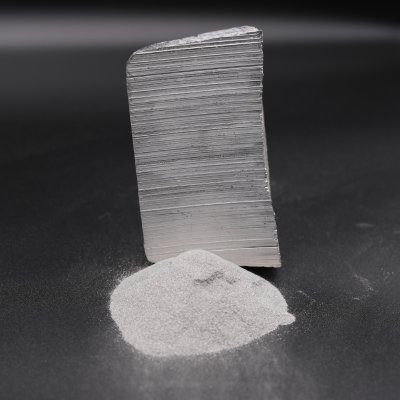
One of the key factors affecting the reaction kinetics is the surface area of the magnesium reagent. The larger the surface area, the more contact there is between the magnesium and the sulfur in the hot metal, and the faster the reaction. That's why we offer different forms of magnesium desulfurization reagents, like Magnesium Grindings and Granular Magnesium. Magnesium grindings have a relatively large surface area due to their fine - particle nature, which allows for a quicker reaction with sulfur. Granular magnesium, on the other hand, has a more regular shape, but still provides a good surface area for the reaction.
Temperature also plays a crucial role. Higher temperatures generally increase the reaction rate. In the hot metal environment, the high temperature provides the necessary energy for the magnesium and sulfur atoms to move around more freely and collide with each other more frequently. When the temperature is right, the magnesium can quickly react with sulfur to form MgS. But it's not just about having a high temperature; the temperature needs to be maintained within an optimal range. If it's too high, it might cause other issues in the steel - making process, like excessive evaporation of magnesium.
The concentration of sulfur in the hot metal is another important factor. According to the principles of chemical kinetics, the higher the concentration of the reactant (in this case, sulfur), the faster the reaction rate. When there is a high sulfur concentration in the hot metal, there are more sulfur atoms available to react with the magnesium. As the reaction progresses and the sulfur concentration decreases, the reaction rate will also slow down.
The way the magnesium reagent is injected into the hot metal also affects the reaction kinetics. Proper injection methods ensure that the magnesium is evenly distributed in the hot metal. If the magnesium is not well - dispersed, some areas of the hot metal may have a lower concentration of magnesium, resulting in an uneven reaction. We've developed some techniques to ensure the efficient injection of our Magnesium Reagent For Hot Metal Desulfurization, which helps to optimize the reaction kinetics.
Another aspect to consider is the presence of impurities in the magnesium reagent. Impurities can either speed up or slow down the reaction. Some impurities might act as catalysts, promoting the reaction between magnesium and sulfur. However, other impurities could form a layer on the surface of the magnesium, preventing the direct contact between magnesium and sulfur and thus reducing the reaction rate. That's why we pay a lot of attention to the purity of our magnesium desulfurization reagents.
Let's talk a bit more about the practical implications of understanding the reaction kinetics. For steel - making companies, knowing how the reaction kinetics work can help them optimize their desulfurization process. By choosing the right form of magnesium reagent, controlling the temperature, and ensuring proper injection, they can achieve a more efficient desulfurization. This means less sulfur in the final steel product, which leads to better - quality steel.
As a supplier, our goal is to provide high - quality magnesium desulfurization reagents that can meet the specific needs of different steel - making processes. We've done a lot of research and development to improve the performance of our products. For example, we've optimized the particle size distribution of our magnesium grindings to increase the surface area and enhance the reaction kinetics.
We also offer technical support to our customers. If you're having trouble with your desulfurization process, or if you want to know more about how our products can work best for you, our team of experts is here to help. We can analyze your specific situation and recommend the most suitable magnesium desulfurization reagent and the best way to use it.
If you're in the steel - making industry and looking for a reliable magnesium desulfurization reagent supplier, we'd love to have a chat with you. Whether you need Magnesium Grindings, Granular Magnesium, or our Magnesium Reagent For Hot Metal Desulfurization, we've got you covered. We're committed to providing you with top - notch products and excellent service. So, don't hesitate to reach out if you're interested in discussing a potential partnership or making a purchase.
In conclusion, the reaction kinetics of magnesium desulfurization reagent is a complex but important topic. By understanding the factors that affect the reaction rate, we can develop better products and help our customers achieve more efficient desulfurization in the steel - making process.
References:

- Smith, J. (2018). "Advances in Steel - Making Desulfurization Processes". Journal of Metallurgical Engineering.
- Brown, A. (2020). "Kinetics of Magnesium - Based Desulfurization in Hot Metal". International Journal of Chemical Kinetics.