

In the field of brazing and soldering, the role of magnesium is both profound and multifaceted. As a supplier of Magnesium for Welding, I have witnessed firsthand the remarkable impact that magnesium has on these crucial joining processes.
1. Understanding Brazing and Soldering
Brazing and soldering are metal - joining processes that involve the use of a filler metal to bond two or more base metals together. The main difference between them lies in the melting point of the filler metal. Brazing uses a filler metal with a melting point above 450°C, while soldering employs a filler metal with a melting point below 450°C. These processes are widely used in various industries, including automotive, aerospace, electronics, and jewelry - making, due to their ability to create strong, reliable joints.
2. The Chemical Properties of Magnesium Relevant to Brazing and Soldering
Magnesium is a lightweight, silvery - white metal with an atomic number of 12. It has a relatively low melting point of 650°C and a high chemical reactivity. In the context of brazing and soldering, its reactivity plays a crucial role. Magnesium has a strong affinity for oxygen, which means it can react with oxygen in the atmosphere to form magnesium oxide (MgO). This property can be both a blessing and a curse in the brazing and soldering processes.
On one hand, the formation of magnesium oxide can act as a protective layer, preventing further oxidation of the base metals and the filler metal. This is especially important in high - temperature brazing operations where oxidation can lead to poor wetting and weak joints. On the other hand, if not properly managed, the magnesium oxide layer can also interfere with the wetting process. Wetting is the ability of the filler metal to spread and adhere to the base metal surface. A thick or non - uniform magnesium oxide layer can prevent the filler metal from making good contact with the base metal, resulting in defective joints.
3. Magnesium as a Deoxidizer
One of the most important roles of magnesium in brazing and soldering is its function as a deoxidizer. In many brazing and soldering applications, the presence of oxygen can cause oxidation of the base metals and the filler metal, leading to the formation of oxides that can weaken the joint. Magnesium can react with these oxides, reducing them to their metallic forms and removing the oxygen.
For example, in the brazing of copper alloys, magnesium can react with copper oxide (CuO) according to the following reaction:
2Mg + 2CuO → 2Cu+2MgO

This reaction not only removes the oxygen from the copper oxide but also forms magnesium oxide, which can act as a protective layer. By reducing the oxidation of the base metal and the filler metal, magnesium helps to improve the wetting and bonding characteristics of the filler metal, resulting in stronger and more reliable joints.
4. Enhancing Wettability
Wettability is a critical factor in brazing and soldering. It determines how well the filler metal spreads and adheres to the base metal surface. Magnesium can enhance wettability in several ways. Firstly, as a deoxidizer, it removes the oxide layers on the base metal surface, allowing the filler metal to make direct contact with the clean metal surface. This improves the capillary action, which is the driving force for the filler metal to flow into the joint gap.
Secondly, magnesium can lower the surface tension of the filler metal. Surface tension is the force that causes the filler metal to form droplets rather than spreading out. By reducing the surface tension, magnesium allows the filler metal to spread more easily over the base metal surface, improving the wetting and filling of the joint.
In some cases, magnesium can also form intermetallic compounds with the base metal and the filler metal. These intermetallic compounds can enhance the bonding between the filler metal and the base metal, further improving the strength and integrity of the joint.
5. Magnesium in Specific Brazing and Soldering Applications
5.1 Automotive Industry
In the automotive industry, brazing and soldering are used for joining various components such as radiators, heat exchangers, and electrical connections. Magnesium - containing filler metals are often used in these applications due to their ability to provide strong joints with good corrosion resistance. For example, in the brazing of aluminum radiators, magnesium can be added to the filler metal to improve the wetting and bonding of the aluminum components. This helps to ensure the efficient transfer of heat and the long - term reliability of the radiator.
5.2 Aerospace Industry
The aerospace industry demands high - strength, lightweight joints that can withstand extreme conditions. Brazing and soldering with magnesium - based filler metals are commonly used for joining titanium, aluminum, and other high - performance alloys. Magnesium helps to improve the wetting and bonding of these alloys, ensuring the structural integrity of the aerospace components. Additionally, the lightweight nature of magnesium contributes to the overall weight reduction of the aircraft, which is crucial for fuel efficiency.
5.3 Electronics Industry
In the electronics industry, soldering is the primary method for joining electronic components to printed circuit boards (PCBs). Magnesium can be used in solder alloys to improve the wetting and reliability of the solder joints. It helps to prevent the formation of voids and cracks in the solder joints, which can lead to electrical failures. Moreover, magnesium - containing solder alloys can provide better thermal conductivity, which is important for dissipating heat generated by the electronic components.
6. Our Magnesium Products for Brazing and Soldering
As a supplier of Magnesium for Welding, we offer a wide range of high - quality magnesium products suitable for brazing and soldering applications. Our magnesium products are carefully formulated to meet the specific requirements of different industries and applications.
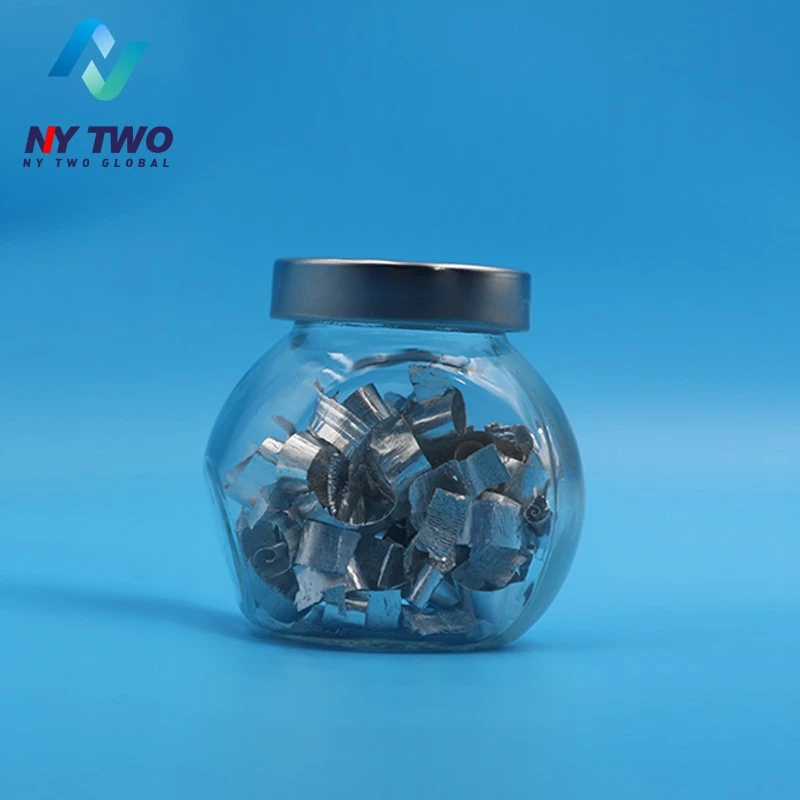
We also provide Magnesium Metal Turned Parts that are precision - machined to ensure accurate dimensions and high - quality surfaces. These parts can be used as filler metals or as components in brazing and soldering operations. Additionally, our Magnesium for Casting products can be used in the production of molds and other components that are involved in the brazing and soldering processes.
7. Conclusion and Call to Action
In conclusion, magnesium plays a vital role in brazing and soldering. Its properties as a deoxidizer, wettability enhancer, and its ability to form strong intermetallic compounds make it an indispensable element in these joining processes. Whether you are in the automotive, aerospace, electronics, or any other industry that relies on brazing and soldering, our high - quality magnesium products can help you achieve strong, reliable joints.
If you are interested in learning more about our magnesium products for brazing and soldering or if you have specific requirements for your application, we invite you to contact us for a detailed discussion. We are committed to providing you with the best solutions and excellent customer service.
References
- Metals Handbook: Welding, Brazing, and Soldering, ASM International.
- Principles of Welding: Processes, Physics, Chemistry, and Metallurgy, John C. Lippold and David L. Kotecki.
- Brazing and Soldering, American Welding Society.