

When it comes to welding aluminum, the choice of filler materials and techniques can significantly impact the quality and strength of the weld. One question that often arises in the welding community is whether magnesium can be used for welding aluminum. As a supplier of magnesium for welding, I'm here to explore this topic in depth and provide you with the scientific insights and practical considerations.
The Role of Magnesium in Aluminum Alloys
Aluminum is a widely used metal due to its lightweight, corrosion resistance, and good electrical conductivity. However, pure aluminum has relatively low strength and hardness, which limits its applications in many structural and high - stress environments. To enhance these properties, aluminum is often alloyed with other elements, and magnesium is one of the most common alloying elements.
Magnesium can improve the strength, hardness, and corrosion resistance of aluminum alloys. When added to aluminum, magnesium forms intermetallic compounds that strengthen the alloy matrix. For example, in 5xxx series aluminum alloys, magnesium is the primary alloying element, typically ranging from 1% to 8%. These alloys are known for their excellent weldability, high strength - to - weight ratio, and good corrosion resistance, making them suitable for applications in the marine, automotive, and aerospace industries.
Using Magnesium in Aluminum Welding
1. Filler Materials
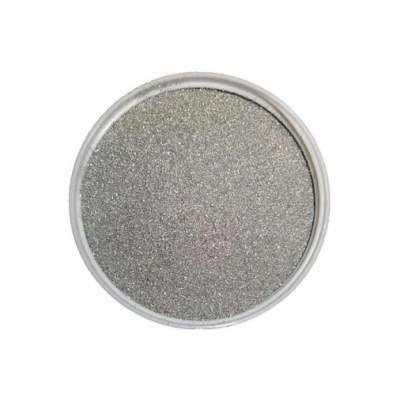
Magnesium can be used as a component in filler materials for welding aluminum. For instance, magnalium, an alloy of magnesium and aluminum, is a popular choice. Magnalium offers a combination of the beneficial properties of both metals. Our Magnalium 200 Mesh and Magnalium Powder are specifically designed for welding and casting applications.
When using magnalium as a filler material, it helps to improve the fluidity of the molten metal during welding. This better fluidity allows for a more uniform weld bead and reduces the likelihood of porosity and other welding defects. Additionally, the presence of magnesium in the filler material can enhance the strength and corrosion resistance of the welded joint.
2. Welding Processes
Magnesium can also play a role in different welding processes for aluminum. In gas tungsten arc welding (GTAW), also known as TIG welding, the use of a magnesium - containing filler rod can improve the wetting and spreading of the molten metal on the base aluminum material. This results in a stronger and more aesthetically pleasing weld.
In gas metal arc welding (GMAW), or MIG welding, the choice of a proper magnesium - based filler wire is crucial. The magnesium in the filler wire can help to deoxidize the molten pool, preventing the formation of oxides that can weaken the weld. It also contributes to the overall mechanical properties of the welded joint.
Advantages of Using Magnesium in Aluminum Welding
1. Improved Strength
As mentioned earlier, magnesium forms intermetallic compounds with aluminum, which strengthen the alloy matrix. When used in welding, this translates to a stronger welded joint. The increased strength can withstand higher loads and stresses, making the welded structure more reliable in various applications.
2. Enhanced Corrosion Resistance
Magnesium can improve the corrosion resistance of aluminum alloys. In a welded joint, the presence of magnesium helps to form a protective oxide layer on the surface, which acts as a barrier against corrosive agents such as moisture and chemicals. This is particularly important in applications where the welded structure is exposed to harsh environments, such as in marine or chemical processing industries.
3. Better Weldability
Magnesium can improve the fluidity and wetting properties of the molten metal during welding. This means that the filler material can more easily fuse with the base aluminum material, resulting in a more uniform and defect - free weld. It also reduces the chances of cracking and porosity, which are common problems in aluminum welding.

Challenges and Considerations
1. Oxidation
Magnesium is highly reactive with oxygen, and in the welding process, it can easily form magnesium oxide. These oxides can cause problems such as porosity and reduced weld quality if not properly managed. To prevent oxidation, appropriate shielding gases, such as argon or a mixture of argon and helium, are used in welding processes. The shielding gas creates a protective atmosphere around the molten pool, preventing the magnesium from reacting with oxygen.
2. Welding Parameters
The use of magnesium in aluminum welding requires careful control of welding parameters. Factors such as welding current, voltage, travel speed, and gas flow rate need to be optimized to ensure a successful weld. Incorrect welding parameters can lead to issues such as excessive spatter, poor fusion, and weak welds.
3. Compatibility
It's important to ensure that the magnesium - containing filler material is compatible with the base aluminum alloy. Different aluminum alloys have different compositions and properties, and using an incompatible filler material can result in a weak or brittle weld. Before starting a welding project, it's advisable to consult the material specifications and conduct test welds to determine the best filler material and welding parameters.
Our Products for Aluminum Welding
As a supplier of magnesium for welding, we offer a range of high - quality products suitable for aluminum welding applications. Our Magnesium Powder (99.9% Mg) is a pure and fine - grained powder that can be used in various welding processes. It can be added to filler materials or used in specialized welding techniques to enhance the performance of the weld.
Our magnalium products, including Magnalium 200 Mesh and Magnalium Powder, are carefully formulated to provide the right balance of magnesium and aluminum for optimal welding results. These products are produced using advanced manufacturing processes to ensure consistent quality and performance.
Conclusion
In conclusion, magnesium can indeed be used for welding aluminum, and it offers several advantages in terms of strength, corrosion resistance, and weldability. However, it also presents some challenges that need to be addressed through proper welding techniques and parameter control.
If you are involved in aluminum welding projects and are looking for high - quality magnesium - based welding materials, we are here to help. Our products are designed to meet the demanding requirements of the welding industry and can provide you with reliable and cost - effective solutions. Whether you are a small - scale welder or a large - scale manufacturing company, we can supply you with the right products for your needs.
If you have any questions or would like to discuss your specific requirements, please feel free to contact us. We are committed to providing excellent customer service and technical support to ensure your welding projects are a success.
References
- American Welding Society. (2019). Welding Handbook, Volume 2: Welding Processes.
-ASM Handbook Committee. (2004). ASM Handbook, Volume 6: Welding, Brazing, and Soldering. - Kotecki, D. J. (2010). Aluminum Welding: Principles and Practices.