

Magnesium is a lightweight and highly reactive metal that has gained significant attention in the welding industry due to its unique properties. As a leading supplier of magnesium products for welding, including Magnalium Powder, Magnesium Welding Wire, and High-Purity Magnesium Powder (99.9%), we understand the crucial role magnesium plays in influencing the heat - affected zone (HAZ) during welding. In this blog, we will delve into the various ways magnesium impacts the HAZ and its implications for welding applications.
Understanding the Heat - Affected Zone
Before discussing the influence of magnesium, it is essential to understand what the heat - affected zone is. During the welding process, the base metal adjacent to the weld bead experiences a significant temperature increase. This region, which is not melted but has its microstructure and properties altered by the heat, is known as the heat - affected zone. The HAZ can be further divided into different sub - zones based on the peak temperature reached and the resulting microstructural changes. These changes can have a profound impact on the mechanical properties, corrosion resistance, and overall performance of the welded joint.

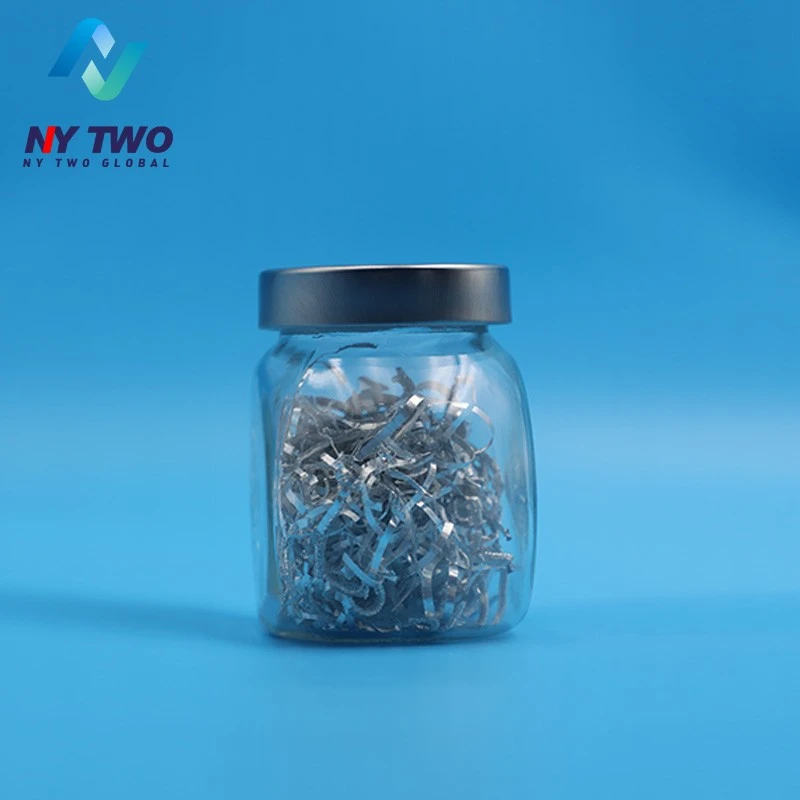
Magnesium's Role in Welding and Its Influence on the HAZ
Oxidation and Protection
One of the most critical aspects of using magnesium in welding is its high affinity for oxygen. When magnesium is exposed to high temperatures during welding, it readily reacts with oxygen in the air to form magnesium oxide (MgO). This oxidation can lead to several issues in the HAZ. Firstly, the formation of MgO can result in porosity and inclusions in the weld and HAZ, which can reduce the mechanical strength of the joint.
However, when proper shielding gas is used, magnesium can also play a protective role. For example, in gas - shielded welding processes such as gas tungsten arc welding (GTAW) or gas metal arc welding (GMAW), an inert gas like argon is used to shield the weld pool and the HAZ from the atmosphere. Magnesium can act as a scavenger, reacting with any remaining oxygen or impurities in the shielding gas or the base metal, thereby reducing the likelihood of oxidation - related defects in the HAZ.
Grain Refinement
Magnesium can significantly influence the grain structure in the HAZ. During the solidification process after welding, the addition of magnesium can act as a grain refiner. When magnesium is present in the weld pool, it can promote the formation of multiple nucleation sites, leading to the growth of smaller grains in the HAZ. Smaller grains generally result in improved mechanical properties such as higher strength, hardness, and better ductility.
The mechanism behind grain refinement involves the segregation of magnesium at the grain boundaries during solidification. This segregation inhibits the growth of existing grains and encourages the formation of new grains, resulting in a finer - grained microstructure in the HAZ. This is particularly important in applications where high - performance welded joints are required, such as in the aerospace and automotive industries.
Phase Transformations
The presence of magnesium can also affect the phase transformations that occur in the HAZ. In some alloy systems, magnesium can change the critical temperatures at which phase transformations take place. For example, in aluminum - magnesium alloys, the addition of magnesium can lower the eutectic temperature and change the composition and distribution of the phases formed during cooling.
These phase transformations can have a significant impact on the hardness and strength of the HAZ. For instance, the formation of intermetallic compounds in the HAZ can increase the hardness but may also reduce the ductility. Understanding these phase transformations is crucial for optimizing the welding parameters and ensuring that the HAZ has the desired combination of properties.
Thermal Conductivity
Magnesium has a relatively high thermal conductivity compared to some other metals. When used in welding, this high thermal conductivity can influence the heat distribution in the HAZ. The rapid transfer of heat away from the weld area by magnesium can result in a narrower HAZ. A narrower HAZ is generally desirable as it reduces the extent of microstructural changes in the base metal, which can lead to better - preserved mechanical properties in the surrounding area.
However, the high thermal conductivity of magnesium can also pose challenges. It can make it more difficult to maintain a stable weld pool, especially in thin - walled sections. Welders may need to adjust the welding parameters such as welding current, welding speed, and heat input to compensate for the rapid heat dissipation caused by magnesium.
Impact on Mechanical Properties of the HAZ
Strength and Hardness
As mentioned earlier, the grain refinement and phase transformations induced by magnesium can have a significant impact on the strength and hardness of the HAZ. The formation of smaller grains and the presence of certain intermetallic compounds can increase the strength and hardness of the HAZ. However, it is important to note that an excessive increase in hardness can also make the HAZ more brittle, increasing the risk of cracking.
Ductility and Toughness
The influence of magnesium on the ductility and toughness of the HAZ is closely related to its effect on the grain structure and phase composition. A finer - grained microstructure generally results in better ductility and toughness. However, the formation of brittle intermetallic compounds can reduce the ductility and toughness of the HAZ. Welders need to carefully balance these factors to ensure that the HAZ has the appropriate combination of strength, hardness, ductility, and toughness for the intended application.
Applications and Considerations
The influence of magnesium on the HAZ has significant implications for various welding applications. In the aerospace industry, where lightweight and high - strength materials are crucial, magnesium - containing alloys are commonly used. The ability of magnesium to improve the mechanical properties of the HAZ through grain refinement and other mechanisms makes it an attractive choice for welding these alloys.
In the automotive industry, magnesium alloys are also being increasingly used to reduce vehicle weight and improve fuel efficiency. However, welding these alloys requires careful consideration of the impact of magnesium on the HAZ. For example, the potential for oxidation and the need for proper shielding gas must be taken into account to ensure the quality of the welded joints.
Conclusion and Call to Action
In conclusion, magnesium plays a complex and multifaceted role in influencing the heat - affected zone during welding. Its ability to cause oxidation, refine grains, affect phase transformations, and influence thermal conductivity makes it both a challenge and an opportunity in the welding process. As a supplier of high - quality magnesium products for welding, we are committed to providing our customers with the knowledge and materials they need to optimize their welding processes.
If you are interested in learning more about how our Magnalium Powder, Magnesium Welding Wire, or High - Purity Magnesium Powder (99.9%) can enhance your welding applications and improve the quality of the HAZ, we encourage you to contact us. Our team of experts is ready to assist you in finding the right solutions for your specific welding needs. Let's work together to achieve high - performance welded joints and take your welding projects to the next level.
References
- AWS Welding Handbook, Volume 1: Welding Science and Technology, American Welding Society.
- Metals Handbook, Volume 6: Welding, Brazing, and Soldering, ASM International.
- "Grain Refinement of Magnesium Alloys: A Review," by A. A. Luo, Journal of Materials Science.
- "Effect of Magnesium on the Oxidation Behavior of Aluminum Alloys During Welding," by B. Smith et al., Journal of Welding Research.