

As a trusted supplier of Magnesium Metal Turnings, I understand the critical importance of accurately measuring the mass of these turnings in various industrial and laboratory applications. In this blog, I'll share some professional insights and practical methods to help you achieve precise mass measurements of magnesium metal turnings.
Understanding the Characteristics of Magnesium Metal Turnings
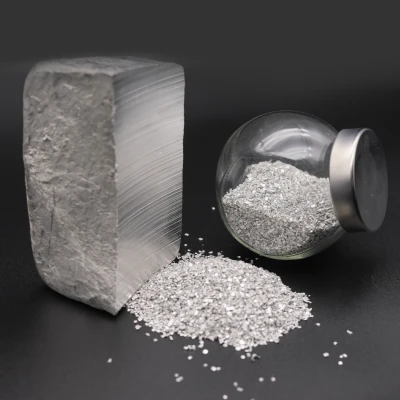
Before delving into the measurement methods, it's essential to understand the unique properties of magnesium metal turnings. Magnesium is a lightweight, silvery - white metal with high reactivity. Magnesium turnings are small, thin pieces of magnesium, which have a relatively large surface - to - volume ratio. This characteristic makes them more reactive to the surrounding environment, especially to moisture and oxygen in the air. For more information on the density of magnesium turnings, you can refer to Mg Turnings Density.
Magnesium turnings are also a corrosive hazard. When exposed to certain substances or in specific conditions, they can cause corrosion, which may affect the accuracy of mass measurement. You can learn more about this aspect from Magnesium Turnings Are A Corrosive Hazard.
Preparation for Mass Measurement
1. Safety Precautions
Safety should always be the top priority when handling magnesium metal turnings. Wear appropriate personal protective equipment (PPE), such as safety goggles, gloves, and a lab coat. Magnesium is highly flammable, and in the presence of an ignition source, it can burn vigorously. Avoid generating dust during handling, as magnesium dust can form explosive mixtures with air.
2. Equipment Selection
- Balance: Choose a high - precision balance suitable for the required measurement range. Analytical balances can provide measurements with an accuracy of up to 0.1 mg or even higher, which is ideal for small - scale and precise measurements. For larger quantities of magnesium turnings, a top - loading balance with a higher capacity may be more appropriate.
- Containers: Select clean, dry containers for holding the magnesium turnings. Glass vials or weighing boats are commonly used. Make sure the containers are pre - weighed to obtain an accurate tare weight.
3. Environmental Control
The measurement environment should be as stable as possible. Avoid areas with strong air currents, vibrations, or temperature fluctuations. A stable temperature and humidity level can minimize the influence of environmental factors on the mass measurement.
Measurement Methods
1. Direct Weighing Method
This is the most straightforward method for measuring the mass of magnesium metal turnings.
- First, place the empty container on the balance and tare the balance to zero. This step eliminates the weight of the container from the final measurement.
- Then, carefully transfer the magnesium turnings into the container using a spatula. Try to add the turnings in small increments to avoid over - adding.
- Once the desired amount of magnesium turnings is added, read the mass value displayed on the balance. Record the measurement accurately.
However, this method has some limitations. If the magnesium turnings are very fine, they may stick to the spatula or the container walls, leading to measurement errors. Also, during the transfer process, some turnings may be lost due to static electricity or air currents.
2. Gravimetric Analysis
Gravimetric analysis can be used to measure the mass of magnesium turnings more accurately, especially when high precision is required.

- Sample Dissolution: Weigh a known mass of magnesium turnings and dissolve them in an appropriate acid solution, such as hydrochloric acid (HCl). The reaction equation is: (Mg + 2HCl=MgCl_{2}+H_{2}\uparrow).
- Precipitation: After the magnesium is completely dissolved, add a precipitating agent to form a magnesium compound precipitate. For example, adding ammonium phosphate ((NH_{4}){3}PO{4}) can form magnesium ammonium phosphate hexahydrate ((MgNH_{4}PO_{4}\cdot6H_{2}O)) precipitate. The reaction equation is: (MgCl_{2}+(NH_{4}){3}PO{4}+6H_{2}O = MgNH_{4}PO_{4}\cdot6H_{2}O\downarrow+2NH_{4}Cl).
- Filtration and Drying: Filter the precipitate using a filter paper, wash it thoroughly to remove impurities, and then dry it in an oven at a suitable temperature until a constant mass is obtained.
- Calculation: Calculate the mass of magnesium in the original sample based on the mass of the dried precipitate and the stoichiometry of the chemical reactions involved.
This method is more time - consuming and complex than direct weighing, but it can provide more accurate results.
3. Volumetric - Mass Conversion Method
If the density of the magnesium turnings is known, the mass can be calculated by measuring the volume.
- First, measure the volume of the magnesium turnings. This can be done by using a graduated cylinder filled with a liquid (such as a non - reactive organic solvent) and measuring the volume change before and after adding the turnings.
- Then, use the density formula (m=\rho V) (where (m) is the mass, (\rho) is the density, and (V) is the volume) to calculate the mass of the magnesium turnings. You can find more details about the density of magnesium turnings from Mg Turnings Density.
However, this method requires an accurate measurement of the volume and a reliable density value. The density of magnesium turnings may vary depending on factors such as the particle size and packing density.
Quality Assurance and Error Analysis
1. Repeat Measurements
To ensure the accuracy of the mass measurement, repeat the measurement several times. Calculate the average value of the measurements and the standard deviation. A small standard deviation indicates high precision.
2. Error Sources
- Environmental Factors: As mentioned earlier, temperature, humidity, and air currents can affect the mass measurement. Try to control these factors as much as possible.
- Instrument Errors: The accuracy of the balance and other measuring instruments may have limitations. Regular calibration of the instruments can reduce instrument - related errors.
- Sample Contamination: Contamination of the magnesium turnings with impurities can lead to inaccurate mass measurements. Make sure the sample is pure and the containers are clean.
Activation of Magnesium Turnings
In some applications, the activation of magnesium turnings is necessary to enhance their reactivity. Activation can also affect the mass measurement to some extent. You can learn more about magnesium turnings activation from Magnesium Turnings Activation.
Activated magnesium turnings may have a different surface condition compared to non - activated ones, which may influence their interaction with the environment and the measurement process. When measuring the mass of activated magnesium turnings, pay special attention to the possible changes in the surface properties and take appropriate measures to ensure accurate measurement.
Conclusion
Accurately measuring the mass of magnesium metal turnings is crucial for various applications, from chemical synthesis in laboratories to industrial manufacturing processes. By following the proper preparation steps, choosing the appropriate measurement methods, and conducting quality assurance and error analysis, you can achieve reliable mass measurements.
As a leading supplier of Magnesium Metal Turnings, we are committed to providing high - quality products and professional technical support. If you have any questions or need further information about magnesium turnings, or if you are interested in purchasing our products, please feel free to contact us for procurement discussions.
References
- Atkins, P. W., & de Paula, J. (2006). Physical Chemistry. Oxford University Press.
- Skoog, D. A., West, D. M., Holler, F. J., & Crouch, S. R. (2013). Fundamentals of Analytical Chemistry. Cengage Learning.