

Is magnesium suitable for automated welding? This is a question that often arises in the welding industry, especially as automation continues to play a more significant role in manufacturing processes. As a supplier of magnesium for welding, I have seen firsthand the potential and challenges associated with using magnesium in automated welding applications. In this blog post, I will explore the suitability of magnesium for automated welding, discussing its properties, advantages, limitations, and best practices.
Properties of Magnesium
Magnesium is a lightweight metal with a density of approximately 1.74 g/cm³, which is about two-thirds the density of aluminum and one-fourth the density of steel. This low density makes magnesium an attractive choice for applications where weight reduction is a priority, such as aerospace, automotive, and electronics industries. In addition to its low density, magnesium also has excellent thermal conductivity, high specific strength, and good corrosion resistance.
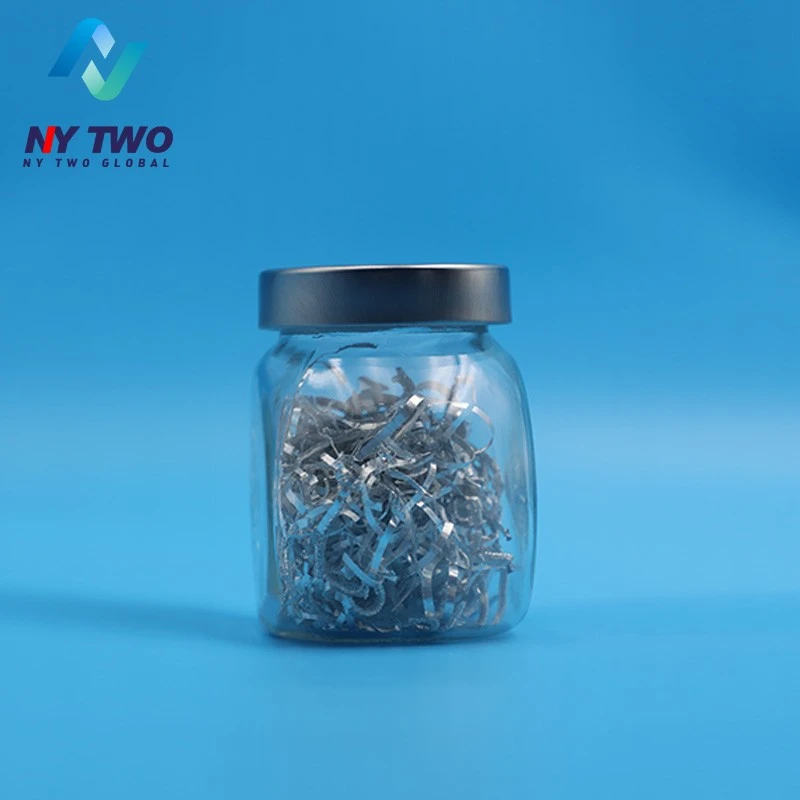

However, magnesium also has some unique properties that can pose challenges in welding. For example, magnesium has a relatively low melting point (650°C) and a high coefficient of thermal expansion, which can lead to distortion and cracking during the welding process. Magnesium also has a high affinity for oxygen, which can result in the formation of oxide films on the surface of the weld, reducing the quality of the joint.
Advantages of Using Magnesium in Automated Welding
Despite its challenges, there are several advantages to using magnesium in automated welding applications. One of the primary advantages is its lightweight nature, which can help to reduce the overall weight of the welded structure. This is particularly important in industries such as aerospace and automotive, where weight reduction can lead to improved fuel efficiency and performance.
Another advantage of using magnesium in automated welding is its high thermal conductivity. This allows for faster heat transfer during the welding process, which can reduce the welding time and improve the productivity of the automated welding system. Additionally, the high thermal conductivity of magnesium can help to prevent the formation of hot spots and reduce the risk of distortion and cracking.
Magnesium also has good corrosion resistance, which can make it a suitable choice for applications where the welded structure will be exposed to harsh environments. This can help to extend the service life of the structure and reduce the need for maintenance and repair.
Limitations of Using Magnesium in Automated Welding
While there are many advantages to using magnesium in automated welding, there are also some limitations that need to be considered. One of the main limitations is the high reactivity of magnesium with oxygen. As mentioned earlier, magnesium has a high affinity for oxygen, which can result in the formation of oxide films on the surface of the weld. These oxide films can reduce the quality of the joint and make it more difficult to achieve a strong and reliable weld.
To overcome this limitation, it is important to use a shielding gas during the welding process to prevent the magnesium from reacting with oxygen in the air. Argon is commonly used as a shielding gas for magnesium welding, as it is inert and does not react with magnesium. Additionally, the surface of the magnesium workpiece should be cleaned thoroughly before welding to remove any oxide films or contaminants.
Another limitation of using magnesium in automated welding is its low melting point and high coefficient of thermal expansion. These properties can make it more difficult to control the welding process and can lead to distortion and cracking in the welded structure. To minimize these issues, it is important to use a welding process that is suitable for magnesium and to carefully control the welding parameters, such as the welding current, voltage, and travel speed.
Best Practices for Using Magnesium in Automated Welding
To ensure the success of using magnesium in automated welding applications, it is important to follow some best practices. Here are some key recommendations:
- Material Selection: Choose high-quality magnesium materials that are suitable for welding. Consider the specific requirements of your application, such as the strength, corrosion resistance, and heat resistance of the welded structure.
- Surface Preparation: Thoroughly clean the surface of the magnesium workpiece before welding to remove any oxide films, oil, grease, or other contaminants. This can be done using a chemical cleaning process or mechanical methods, such as grinding or sanding.
- Shielding Gas: Use a suitable shielding gas, such as argon, to protect the weld pool from oxidation during the welding process. The shielding gas should be supplied at the correct flow rate to ensure proper coverage of the weld area.
- Welding Process: Select a welding process that is suitable for magnesium, such as gas tungsten arc welding (GTAW) or gas metal arc welding (GMAW). These processes offer good control over the welding parameters and can produce high-quality welds.
- Welding Parameters: Carefully control the welding parameters, such as the welding current, voltage, and travel speed, to ensure a stable and consistent welding process. The welding parameters should be adjusted based on the thickness and type of magnesium material being welded.
- Joint Design: Design the joint to minimize the stress concentration and to allow for proper fusion of the weld. Use appropriate joint configurations, such as butt joints or lap joints, and ensure that the joint edges are properly prepared.
- Post-Weld Treatment: After welding, the welded structure may require post-weld treatment, such as heat treatment or surface finishing, to improve its mechanical properties and corrosion resistance.
Our Products for Magnesium Welding
At our company, we offer a wide range of magnesium products for welding applications. Our products include Magnesium Welding Wire, Magnalium 200 Mesh, and Magnesium Cored Wires. These products are carefully manufactured to meet the highest quality standards and are suitable for use in various automated welding processes.
Our magnesium welding wire is available in different diameters and compositions to meet the specific requirements of our customers. It offers excellent weldability, high strength, and good corrosion resistance. Our magnalium 200 mesh is a high-quality alloy that combines the lightweight properties of magnesium with the strength and durability of aluminum. It is ideal for use in applications where weight reduction and high strength are required. Our magnesium cored wires are designed to provide a stable and consistent welding process, with excellent arc stability and low spatter.
Conclusion
In conclusion, magnesium can be a suitable choice for automated welding applications, provided that the proper precautions and best practices are followed. Its lightweight nature, high thermal conductivity, and good corrosion resistance make it an attractive option for industries such as aerospace, automotive, and electronics. However, its high reactivity with oxygen, low melting point, and high coefficient of thermal expansion require careful consideration and control during the welding process.
If you are interested in using magnesium for your automated welding projects, we encourage you to contact us to discuss your specific requirements. Our team of experts can provide you with the technical support and guidance you need to ensure the success of your welding applications. We are committed to providing high-quality magnesium products and excellent customer service, and we look forward to working with you.
References
- AWS Welding Handbook, Volume 2: Welding Processes. American Welding Society.
- Metals Handbook, Volume 6: Welding, Brazing, and Soldering. ASM International.
- "Welding of Magnesium Alloys" by J. C. Lippold and D. A. Koss.