

Hey there! As a supplier of magnesium chips, I often get asked about where the raw materials for making these chips come from. So, I thought I'd take a moment to share some insights on this topic.
1. Magnesite
Magnesite is one of the primary sources of raw materials for magnesium chips. It's a mineral composed of magnesium carbonate (MgCO₃). Magnesite deposits can be found all over the world, including in countries like China, Australia, and Turkey.
The process of extracting magnesium from magnesite usually involves a few steps. First, the magnesite is mined from the earth. Then, it's calcined, which means heating it to high temperatures. This process converts the magnesium carbonate into magnesium oxide (MgO). After that, the magnesium oxide can be further processed to obtain magnesium metal.
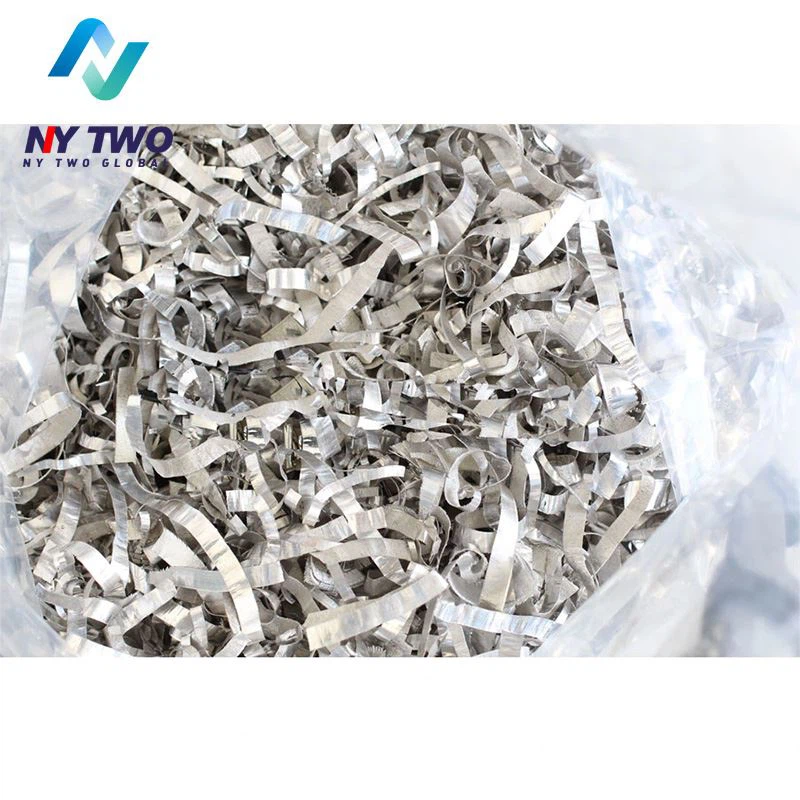

The advantage of using magnesite as a raw material is that it's relatively abundant. However, the extraction process can be energy - intensive, as it requires high - temperature calcination.
2. Dolomite
Dolomite is another important source. It's a double carbonate mineral composed of calcium magnesium carbonate (CaMg(CO₃)₂). Similar to magnesite, dolomite deposits are widespread globally.
To get magnesium from dolomite, it goes through a series of chemical reactions. First, the dolomite is calcined to form a mixture of calcium oxide (CaO) and magnesium oxide (MgO). Then, this mixture is reacted with ferrosilicon in a process called the Pidgeon process. The Pidgeon process is a well - established method for producing magnesium from dolomite. It involves heating the mixture in a vacuum furnace, and the magnesium vapor is then condensed to obtain pure magnesium metal.
Dolomite is a cost - effective option in some regions because of its wide availability. But the Pidgeon process also has its drawbacks, such as the generation of a large amount of solid waste.
3. Seawater
Seawater is a vast and almost inexhaustible source of magnesium. Magnesium exists in seawater in the form of magnesium chloride (MgCl₂). The concentration of magnesium in seawater is relatively low, but due to the large volume of seawater, the total amount of magnesium is huge.
The process of extracting magnesium from seawater starts with the addition of lime (calcium hydroxide, Ca(OH)₂) to the seawater. This causes the precipitation of magnesium hydroxide (Mg(OH)₂). The magnesium hydroxide is then filtered and reacted with hydrochloric acid to form magnesium chloride. Finally, the magnesium chloride is electrolyzed to obtain magnesium metal.
One of the biggest advantages of using seawater as a raw material is its sustainability. It doesn't deplete land - based resources. However, the extraction process is complex and requires a large amount of energy for electrolysis.
4. Brine
Brine, which is a concentrated salt solution, can also be a source of magnesium. Brine can be found in salt lakes, underground salt deposits, and as a by - product of some industrial processes.
Similar to seawater, the magnesium in brine is usually in the form of magnesium chloride. The extraction process from brine is similar to that from seawater. First, the magnesium is precipitated as magnesium hydroxide, then converted to magnesium chloride, and finally electrolyzed to obtain magnesium metal.
Brine has the advantage of having a higher magnesium concentration compared to seawater in some cases, which can reduce the cost and energy consumption of the extraction process.
Applications of Magnesium Chips
Magnesium chips have a wide range of applications. They are commonly used in the Grignard reaction. If you want to know more about Magnesium Turnings For Grignard Reaction, you can click the link. The Grignard reaction is a very important organic reaction in the synthesis of various organic compounds.
Magnesium chips also react with hydrochloric acid. You can find more details about Magnesium Turnings And Hydrochloric Acid by clicking the link. This reaction is often used in educational laboratories to demonstrate chemical reactions and in some industrial processes.
The molecular formula of magnesium turnings is Mg. If you're interested in the Magnesium Turnings Molecular Formula, click the link for more information.
Why Choose Our Magnesium Chips
As a supplier of magnesium chips, we take pride in providing high - quality products. We source our raw materials from reliable and sustainable sources. Whether it's magnesite, dolomite, seawater, or brine, we ensure that the extraction and production processes are carried out with strict quality control.
Our magnesium chips are carefully processed to meet the specific requirements of different applications. We have a team of experts who are constantly working on improving the production process to make our products more cost - effective and environmentally friendly.
If you're in the market for magnesium chips, whether for research, industrial production, or educational purposes, we'd love to hear from you. We can offer competitive prices, excellent customer service, and timely delivery. Don't hesitate to reach out to us for more details about our products and to start a procurement negotiation.
References
- "Magnesium: Properties, Processing, and Applications" by John E. Hatch
- "Handbook of Magnesium Technology" edited by B.L. Mordike and T. Ebert
- "Extraction of Magnesium from Seawater" - Journal of Chemical Education